Priti Unfair

Alf Dubs, member of the House of Lords, writes: Where to start with Patel’s ‘overhaul’ of the rules regarding asylum, announced today?

The Home Office claims it is ‘collapsing’ under the number of asylum claims. The Home Secretary herself described the asylum process as ‘broken’. But this government has been in charge for a decade, during which time the application process has got 8 times longer.

In 2019 there were approx 5 asylum applications for every 10,000 residents in the UK. Compare that to the EU average of 14 asylum applications per 10,000 of the population, placing us 17th in the EU in terms of asylum applications per head of population. The HO has closed the only two legal routes for refugee children stranded in Europe, including lone children and those with family here, to seek asylum in the UK. This is not “fair but firm’ – it keeps families apart and lacks compassion.

Removing legal routes to safety doesn’t prevent criminality – it fuels it. The day the legal routes for refugee children seeking asylum here was closed was a field day for people traffickers and smugglers who exploit despair.

And just to add one final piece of data, because facts matter. There were 29,456 asylum applications in the UK in 2020 – a drop of 18% on 2019. Germany took 7 times that number (121,955), France & Spain took 3 times that number (93,470 and 88, 530) and Greece with a population of 10.7m, took 40,560.

For Everybody to See

“The contracts are there on record for everybody to see,” said the Prime Minister. Except for the 100 he’d forgotten about.

19 February 2021
The High Court rules that the Health Secretary acted unlawfully by not publishing contracts worth hundreds of millions of pounds.

22 February 2021
The Prime Minister assured us that all was there to see.

5 March 2021
The High Court confirmed that out of 708 contracts there were still 100 unpublished.

Yet another example of how the Government misleads Parliament and the public.


The BBC keeps a timeline of the Government’s procurement of PPE during the pandemic.

Protecting the Judges

The Lord Chancellor Robert Buckland plans to protect judges from being drawn into politics, according to a press release issued yesterday.

Those are the words used to introduce a new balance between government, the judiciary and citizens. Cabinet ministers have been seen acting unlawfully by the courts and the Government’s response is, according to shadow Lord Chancellor David Lammy, “sweeping and dangerous”.

“There has been briefing from Johnson’s Downing Street of the intention “to get the judges sorted”, and there can be little doubt that the review is part of an attempt to hoard more power in No. 10,” Mr Lammy said in Parliament yesterday.

This is also confirmed in the above mentioned press release where Mr Buckland states that “The government will consider defining exactly how and when a use of power is automatically ‘null and void’.”

“The question is whether we feel comfortable placing all our trust in politicians, or prefer our widely respected and independent courts to continue act as a bulwark against potential abuses by an overreaching executive,” comments transparency campaigner Gina Miller.


The Government has an online survey open until 29 April 2021 on these proposals.

Whitehall of Mirrors

Whitehall in 2021 is like a hall of mirrors, a maze of illusions and broken promises. Revelations, which a few years ago would have caused resignation, are simply shrugged off and brushed into oblivion.

Last November the Prime Minister announced he backed the Home Secretary Priti Patel after it had been confirmed she broke the ministerial code by bullying civil servants. This caused Standards Chief Sir Alex Allan, who had been asked to investigate the allegations, to resign.

Only a few weeks ago the High Court found Health Secretary Matt Hancock to have been acting unlawfully with contracts on PPE for medical staff. His response was that there wasn’t time for regular procurement because of the urgency of the situation when the pandemic broke out in 2020. Hancock also claimed there had never actually been a shortage of PPE.

BBC Panorama shows in their documentary Cashing in on Covid how the Government created a VIP lane for friends to win contracts.

Michael Gove has been found in contempt of Parliament, just like his ally and adviser Dominic Cummings in 2019, by simply not showing up to a committee hearing where difficult questions might be expected.

For centuries, politicians have – at least given the impression to – been proud to honourably serve the country. If they were found to lie or break the law, there was a public scandal and they had to resign. There has been a distinctive shift in standards for cabinet ministers in this Government which seems to normalise contradictions, hiding, lying and breaking the ministerial code.

Stifling Non-Violent Protest

The UK Government is rushing the so-called “Police Bill” through Parliament.

The bill features several eye-catching items, such as power to ministers and police to curb “non-violent protest” and that assault on a “dead” statue gives a longer maximum sentence than assault on a living emergency worker.

Yesterday MPs voted for the newer, stricter rules despite the fact that protests actually gave them the power they now have. A few generations ago many of these politicians would not have had the right to be elected to Parliament let alone to vote, themselves, in an election.

This Government seems to normalise speeding up processes and avoiding Parliament’s right and duty to examine their bills before they become law. There is a very obvious risk that this results in laws which undermine the democracy and citizens’ basic rights.

Press under Pressure

Like Freedom of Speech, the Freedom of the Press is one of the building bricks in a healthy democracy.

Citizens should have access to news and other information from different providers presenting a multitude of angles and opinions. Investigative reporters should be able to, in a professional way, hold people of power to account. But freedoms also come with responsibility.

There are examples when journalists have gone too far and been accused of invading people’s private sphere. There are other examples when journalists have been proved to report blatant lies. And again, more examples of journalists publishing controversial opinions which are contrary to Editor’s Code of Practice.

To counter these tendencies, voices are being raised to legislate the freedom of press and set clear boundaries to what can and can’t be done. During 2020, the UK government tried to control the news reporting by only briefing journalists they trusted to report favourably. These measures have been criticised to be hindering investigative journalism and for the Government to avoid scrutiny.

Since 2018 the Arts & Humanities Research Council runs a project called Defining the Freedom of the Press. Read more about their findings.

Trashing the Mash

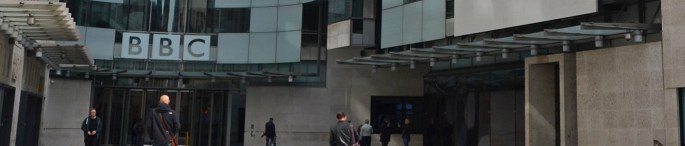
The BBC has decided to discontinue the satire show “The Mash Report” on grounds that it is too left-wing and woke.

What the BBC decision makers seem to have overlooked is that the nature of satire is to mock politicians and other people in power. Since the Conservative Party has been in power for more than a decade there has been many jokes on their expense.

Some sources claimed that BBC’s new director general Tim Davie, who is very loyal to the Conservatives, was behind the decision to axe the popular show. It seems unfortunate that the BBC, which for generations has been a beacon of light and role model of unbiased reporting and quality TV-productions, should choose to make such a decision on political grounds.

There is speculation that the program will continue on a competing channel, but unfortunately the BBC’s credibility as an unbiased broadcaster is already stained. A democracy needs to allow for a wide spectrum of opinions. Free speech and freedom of the press are two important building bricks to uphold this principle.

Use it or Lose it

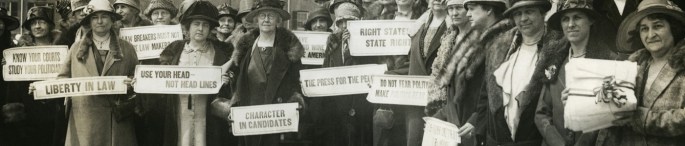
We’ve only had universal suffrage for a bit more than a century. A hundred years might sound like a long time, but from a historical perspective it’s a drop in the ocean.

It’s often emphasised that the 1918 electoral reform gave women the right to vote, but what we tend to forget was that it also included men. A vast number of men were sent out to World War I to fight for their country, a country that didn’t grant them the right to vote for government.

This changed after the war thanks to brave women and men who had campaigned for suffrage for more than a decade. Some even went to prison.

The right to vote is one of the most important building bricks in a democracy. Voting is our chance to influence how the country is run. Remember that if you refrain from voting, you actually increase the chances of “the other side” to win.

A Tender Touch

Every year the Government spends billions of pounds on goods and services. If there isn’t enough revenue from taxes, they have to borrow.

If they borrow, the loan will of course eventually have to be paid back, and that will also have to – in the end – be tax money. It’s important to remember that all Government expenditure is money that has been paid in by ordinary people like you and me.

To make sure our tax money is used in the best possible way Parliament requires all government departments and their related organisations to ensure that they meet the minimum mandatory Government Buying Standards (GBS) and there is guidance to best practice on gov.uk.

All government departments should invite suppliers to tender every time they plan a big purchase. This gives them a chance to compare prices and quality from different bidders and make sure they spend our tax money sensibly.

Conflict of Free Speech

You’d be forgiven for thinking that in a democracy you can say what you like thanks to the Human Rights Act of 1998.

The UN also mentions the freedom of opinion and expression in its Declaration of Human Rights. But personal freedoms should always be cherished and used with care. In a fair society my freedom must not impose on yours.

Everyone has the right to freedom of opinion and expression; this right includes freedom to hold opinions without interference and to seek, receive and impart information and ideas through any media and regardless of frontiers.

Article 19, Universal Declaration of Human Rights

Hate speech, for instance, is illegal and fraud is a criminal act. This means that you can not express hatred to a person due to his or her skin colour, nationality or sexual orientation. You can also be prosecuted if you deceive people and it is not allowed to spread terrorist propaganda.

You should be protected by the free speech legislation if you:

  • Tell the truth, even if it is uncomfortable,
  • Blow the whistle on misconduct,
  • Present real facts, not an “alternative truth”

Don’t be afraid to get up on your soap box and give us your stance, but do it with dignity and take pride in being honest and true to yourself.