As if they anticipated the court’s decision, the Mail on Sunday published an attack on the Good Law Project’s founder, Jolyon Maugham QC, last weekend.
The article includes irrelevant references to Mr Maugham’s killing of a fox in his garden and implies that donations which finance the Good Law Project may not be used as intended. The Mail on Sunday also suggests that Mr Maugham has tried to play down his previous career, despite the bio on GLP’s website.
“[The attack] is a transparent and deceitful attempt by Government to target one of its most effective critics,” the Good Law Project comments in a statement.
Yesterday the High Court ruled that our Government acted unlawfully when awarding a contract to the PR firm “Public First”, which is run by friends of Dominic Cummings and Michael Gove. It is the second time in just a few months that the High Court judged that a Cabinet Minister acted unlawfully. Both cases were brought by the Good Law Project.
The interview board spoke to four applicants for Ofcom chairman and recommended three of the candidates to the Government. Their response is to appoint a new interview board, rather than appoint one of the approved candidates.
It had been expected that PM Boris Johnson’s preferred candidate, Paul Dacre, would be appointed in May. The interview board, however, found that he was “not appointable”.
Critics within the trade and from the general public have claimed that Ofcom is – and should remain – an independent body providing independent guidance. This independence might be jeopardised with Mr Dacre at the helm. He repeatedly made his stance against the BBC clear during his 26 years as editor of the Daily Mail.
The Government’s move to appoint a new interview board rather than accept the recommendations of the current panel can be seen as a further step towards its cultural cleansing.
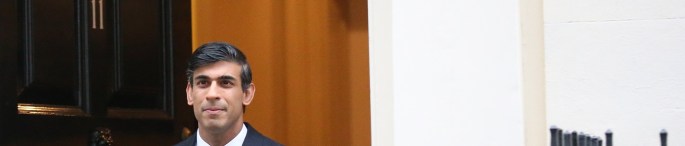
Rishi Sunak, the Chancellor of the Exchequer, has kept a clear line throughout the pandemic by arguing for the economy. Has this sidelined the health and lives of British citizens?
A few months later he introduced the “Eat Out to Help Out” scheme. This gave those who could afford to go to a restaurant £10 off the bill, although three weeks earlier he had refused to give poorer families free school-meals during the summer break. The school-meal policy was reversed in one of the Government’s frequent U-turns.
Unsurprisingly a study by Warwick University later showed that encouraging people to eat out in August had caused a 17% increase in the Covid-19 infection rate.
In September, when the infection rates were once again soaring, Mr Sunak argued against a second lockdown, because it would hurt the economy. Not just the health experts but many laymen could predict the devastating result of the delay of the lockdown.
This spring the Chancellor maintains his distrust of experts who he claims keep changing the goal posts. He also urges employers to open up offices and stop employees working from home.
It is understandable, indeed commendable, that a Chancellor takes a stance for the country’s economy. However, even a Chancellor should know that the economy does not function well constant political U-turns, incompetence and indecision.
Just as the people depend on the economy, the economy depends on the people.
During the last 18 months close allies to the Government have filled seats on boards of public bodies.
Peter Riddell, the commissioner for public appointments commented on this in a speech last week. He emphasised that the “breadth of the campaign and close engagement of 10 Downing Street” makes a difference from earlier such trends. This is described as cultural cleansing by one chair of a big institution.
After reports of right-wing speakers being banned from university campus events the Government wanted to appoint a champion for free speech. The need for this was disputed by students and universities alike. At the same time people who disagree with the Government are being replaced by yes-men. The list is long, below are some recent examples.
Museum Dr Aminul Hoque, whose academic work encourages decolonising the curriculum, was not reappointed as a trustee of the Royal Museums Greenwich, which also led to the resignation the chairman Sir Charles Dunstone.
Universities Lord Wharton, who managed the prime minister’s leadership campaign, has been appointed to head the Office for Students.
Channel 4 Contrary to the recommendations of the board of Channel 4 and Ofcom, who traditionally does the vetting, the Culture Secretary Oliver Dowden blocked the reappointment of Uzma Hasan and Fru Hazlitt to the board.
Ofcom Former editor of the Daily Mail, Paul Dacre, who is known for his criticism towards the BBC and used his newspaper to ardently campaign for Brexit, has been suggested to chair the media regulator Ofcom.
Riddell, himself, was recently reappointed for six months only. It will be interesting to see if his replacement in September is yet another cosy chum of No 10.
The Johnson Government has not only been taken to court by the EU for breaking international law, the UN now accuses No 10 of normalising white supremacy.
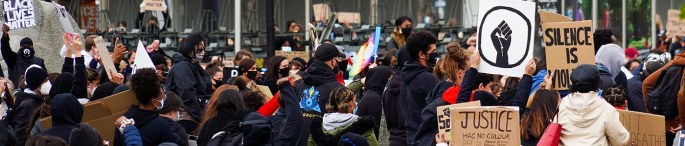
After the Black Lifes Matter protests last year Samuel Kasumu, special adviser for civil society and communities, initiated a report on racism in the UK. The report was published on 31 March 2021 and concluded that there was no institutional racism in Britain.
Earlier this week the human rights experts in the UN’s Working Group of Experts on People of African Decent condemned the report, stating that it is “tone-deaf” and “reprehensible”. It notes that the report has twisted data and misapplied statistics. Researchers have shown one example of this, from the labour market, in an article published on the LSE blog.
This echoes the criticism in Britain when the Government’s report was first published. A panel of experts said in an ITV interview that the report was “deeply offensive”.
Questions have also been raised over the impartiality of the commission and how it was finalised. Several scholars claim their research was misrepresented in the report. Commissioners did not get a chance to read the text in its entirety before publication and they were not aware of the conclusions presented by the chairman in his foreword. It is reported that the final result was dictated by No 10 to accommodate the Government’s own agenda, not to give a truthful picture of Britain today. Samuel Kasumu resigned the same day the report was published.
Russia still poses an active threat to the UK, according to the Government’s Integrated Review, published in March. Vladimir Putin stated in 2019 that a government’s duty is to create a stable life for its citizens. He went on to say that liberal democracies have failed in providing this stability for people.
This was the reason he declared “Cold War 2.0” to fight liberalism back in 2007 when most representatives of complacent western democracies did not see the need to take him seriously. Researchers of political science agree that Putin perceives a united Europe and a strong USA as a threat to Russia. This is why he was in favour of Brexit in the hope it would help destabilise the EU. He believes that by interfering in domestic politics on other continents Russia gains international power.
In the last decade it has been proved that Russian agents have operated and poisoned people on British soil. The so-called “Russia Report”, published after almost a year’s delay last July, showed that Russia had meddled in political campaigns at least since the Scottish independence referendum in 2014 and up until the General Election of 2019.
The Government claims that British citizens of Russian origin should not be discriminated against. They have the same right as all other Brits to make donations, which is of course true. What is conspicuous is that there are a few, very wealthy individuals with close ties to the Russian president who repeatedly feed money into the Conservative party, while UK officials are accused of turning a blind eye to the threat of foreign interference in British politics.
Reflections from the European Parliament by Terry Reintke, MEP
It has been more than a year now since we had to say goodbye to our UK colleagues in the European Parliament. We sang “Auld Lang Syne” together and tried to look ahead as the damaging decision for the UK to leave the EU was finalised.
By now, the transition period is over. We are still in the middle of a global pandemic and a deal for the future relations has been presented – after difficult negotiations that were too limited in time to actually tackle all areas. The outcome is being scrutinised by the European Parliament. Many committees have given their green light, although numerous criticism has been voiced.
First and foremost, the European Parliament will fight for a stronger democratic engagement in the governance of the treaty, both of the Parliament itself as the only directly elected institution and thus representation of EU citizens as well as of civil cavity organisations to have a strong voice in the bumpy road ahead.
Brexit is far from being over
The question that arises in the next months and years will become more and more complex and potentially difficult to solve – as the UK will potentially more and more diverge from EU standards. What was established as a solution to this – non-regression and the newly established rebalancing mechanism – will have to be tested in practice. In a lot of ways, this deal is more far reaching than any other deal the EU has ever negotiated and will become a reference point in future trade negotiations. However, this also means, that these new mechanisms and ideas have never been used before. With the transition period, a lot of uncertainty ended only to be replaced by new one.
The fact that the adhesion of both sides to the European Convention of Human Rights was celebrated as a great success, speaks volumes about where we stand in the struggle for rule of law and fundamental rights. There is an authoritarian wave blowing over Europe. Governments – in the EU, but also the one in the UK – trying to restrict fundamental freedoms and basic structures of checks and balances. As European citizens, we have to work together to stand up to this threat. A strong multilateral rules-based system and a European Union that stands up for democracy are good foundations for this. Nevertheless, it will take all of us – in the Parliaments and in the streets – to defend our democracies, the rule of law and fundamental rights.
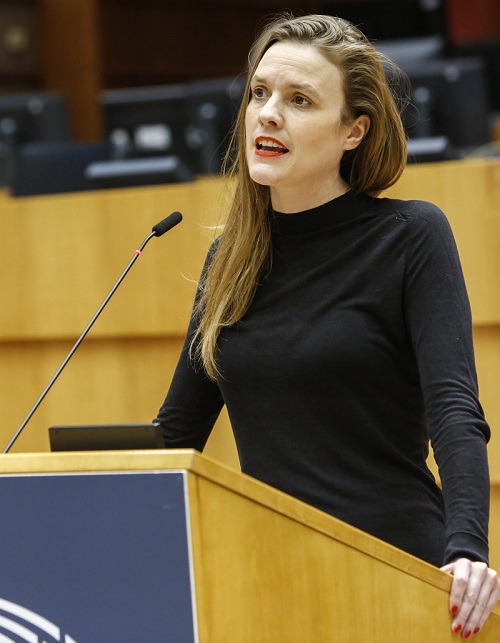
Terry Reintke in the European Parliament. Photo: The European Parliament
Overall, this deal is obviously much worse than the deal the UK had before. It means bureaucracy, a multitude of additional committees, the loss of rights, freedom and many opportunities coming from EU membership. Most prominently felt perhaps by the thousands of students and young adults who no longer can participate in the Erasmus exchange programme.
Looking into the future, the European Parliament is going to stay open and ready for UK citizens. We have seen the rise of the biggest pro-European citizen’s movement in the UK over the past years. We will do everything we can to keep the ties with our counterparts on the other side of the channel. We are planning networking events, exchanges with citizens, civil society organisations and obviously building strong ties in political fields where our cooperation will remain crucial such as climate policies, foreign and security policy and so many more.
Our door will stay open. We will continue to support all the people in the UK who will struggle in the coming days and years, but who also will fight with all their heart for a strong Europe with the United Kingdom as a part of it.
Terry Reintke is vice-president of the Greens/EFA group in the European Parliament, co-president of the LGBTI Intergroup and founder of the EU-UK Friendship Group. Terry studied political science in Berlin and Edinburgh. She was spokesperson of the Federation of Young European Greens (FYEG) before entering the European Parliament in 2014.
The 1990’s offered hopeful days when the peace process started in Northern Ireland. It took years to finalise what has become known as the Good Friday Agreement in 1998.
The EU has created the longest period of peace between the member states since Roman times because it offers countries an opportunity to discuss and work together rather than fighting against each other. It was on this platform that the bitter feuds in Ireland could be settled. It has given us more than 20 years of peace within the United Kingdom.
The politicians and spin doctors who painted a utopian picture of an undefined Brexit dismissed concerns that the peace in Northern Ireland might be jeopardised. Yet now, only three months after Brexit, there is already new unrest.
It is unrealistic to expect that one politician should know everything about everything, that’s why they have experts to advise them. The tragedy with Brexit is that the leading figures of the campaign claimed to have had enough of experts. Day by day, week by week we see the sad results of that approach.
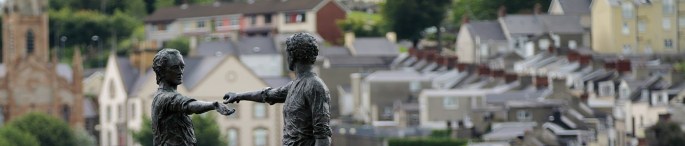
In 1992 Maurice Harron’s bronze statues in Londonderry joined hands in hope. Today’s politicians need to call in the experts to make sure those hands don’t slip away from each other.
At the weekend it was confirmed – what many had long suspected – that there had been an affair between the Prime Minister and Jennifer Arcuri.
As sordid and sad as the story may be, with a deceived wife, let-down children and abandoned lovers along the way, their bedroom stories should be their own business and none of ours.
What is very much our business, however, is the tax payers’ money which was spent on the, then, Mayor of London’s sex partner. The police decided not to investigate the matter and that was surely yet another message to top ministers that they can get away with questionable behaviour.
A recent parallel is the Health Minister awarding contracts during the Covid crisis without proper procurement procedures. The High Court later stated that this was unlawful, but so far there has been no repercussion.
The Greater London Assembly has now decided to resume their investigation of Mr Johnson’s conduct in public life.
A professor working for the National Trust has received death threats for exploring the historical links to slavery of the charity’s properties.
The report was criticised for being “woke” when it was first published last September, which led to an investigation whether the trust had breached charity law. The Charity Commission has now ruled that the National Trust has acted legally and responsibly at all times and would face no regulatory action.
Hilary McGrady, the head of the National Trust, says that in hindsight it was a mistake to publish the report last autumn, when it coincided with the Black Lives Matter controversy. It is important for the National Trust to look into the history of their properties, as it unveils important stories for coming generations.
Knowing our history, we can learn from it and make progress, rather than repeating mistakes our ancestors made. Death threats as such are an ancient method of intimidation, which has no place in a modern, progressive society.







 STANCE NEWS