The interview board spoke to four applicants for Ofcom chairman and recommended three of the candidates to the Government. Their response is to appoint a new interview board, rather than appoint one of the approved candidates.
It had been expected that PM Boris Johnson’s preferred candidate, Paul Dacre, would be appointed in May. The interview board, however, found that he was “not appointable”.
Critics within the trade and from the general public have claimed that Ofcom is – and should remain – an independent body providing independent guidance. This independence might be jeopardised with Mr Dacre at the helm. He repeatedly made his stance against the BBC clear during his 26 years as editor of the Daily Mail.
The Government’s move to appoint a new interview board rather than accept the recommendations of the current panel can be seen as a further step towards its cultural cleansing.
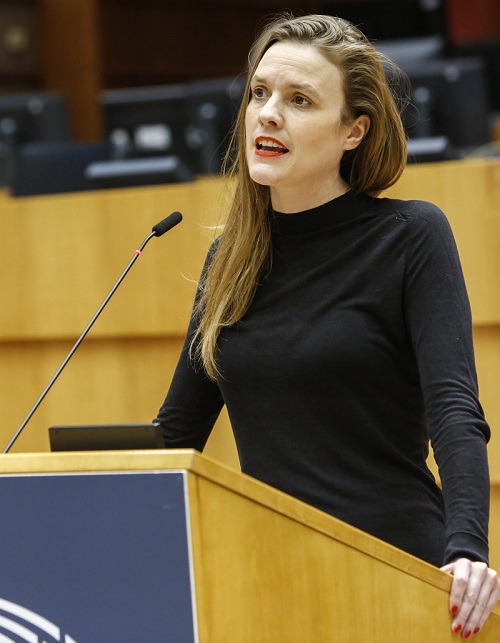
Reflections from the European Parliament by Terry Reintke, MEP
It has been more than a year now since we had to say goodbye to our UK colleagues in the European Parliament. We sang “Auld Lang Syne” together and tried to look ahead as the damaging decision for the UK to leave the EU was finalised.
By now, the transition period is over. We are still in the middle of a global pandemic and a deal for the future relations has been presented – after difficult negotiations that were too limited in time to actually tackle all areas. The outcome is being scrutinised by the European Parliament. Many committees have given their green light, although numerous criticism has been voiced.
First and foremost, the European Parliament will fight for a stronger democratic engagement in the governance of the treaty, both of the Parliament itself as the only directly elected institution and thus representation of EU citizens as well as of civil cavity organisations to have a strong voice in the bumpy road ahead.
Brexit is far from being over
The question that arises in the next months and years will become more and more complex and potentially difficult to solve – as the UK will potentially more and more diverge from EU standards. What was established as a solution to this – non-regression and the newly established rebalancing mechanism – will have to be tested in practice. In a lot of ways, this deal is more far reaching than any other deal the EU has ever negotiated and will become a reference point in future trade negotiations. However, this also means, that these new mechanisms and ideas have never been used before. With the transition period, a lot of uncertainty ended only to be replaced by new one.
The fact that the adhesion of both sides to the European Convention of Human Rights was celebrated as a great success, speaks volumes about where we stand in the struggle for rule of law and fundamental rights. There is an authoritarian wave blowing over Europe. Governments – in the EU, but also the one in the UK – trying to restrict fundamental freedoms and basic structures of checks and balances. As European citizens, we have to work together to stand up to this threat. A strong multilateral rules-based system and a European Union that stands up for democracy are good foundations for this. Nevertheless, it will take all of us – in the Parliaments and in the streets – to defend our democracies, the rule of law and fundamental rights.
Terry Reintke in the European Parliament. Photo: The European Parliament
Overall, this deal is obviously much worse than the deal the UK had before. It means bureaucracy, a multitude of additional committees, the loss of rights, freedom and many opportunities coming from EU membership. Most prominently felt perhaps by the thousands of students and young adults who no longer can participate in the Erasmus exchange programme.
Looking into the future, the European Parliament is going to stay open and ready for UK citizens. We have seen the rise of the biggest pro-European citizen’s movement in the UK over the past years. We will do everything we can to keep the ties with our counterparts on the other side of the channel. We are planning networking events, exchanges with citizens, civil society organisations and obviously building strong ties in political fields where our cooperation will remain crucial such as climate policies, foreign and security policy and so many more.
Our door will stay open. We will continue to support all the people in the UK who will struggle in the coming days and years, but who also will fight with all their heart for a strong Europe with the United Kingdom as a part of it.
Terry Reintke is vice-president of the Greens/EFA group in the European Parliament, co-president of the LGBTI Intergroup and founder of the EU-UK Friendship Group. Terry studied political science in Berlin and Edinburgh. She was spokesperson of the Federation of Young European Greens (FYEG) before entering the European Parliament in 2014.
Alf Dubs, member of the House of Lords, writes:Where to start with Patel’s ‘overhaul’ of the rules regarding asylum, announced today?
The Home Office claims it is ‘collapsing’ under the number of asylum claims. The Home Secretary herself described the asylum process as ‘broken’. But this government has been in charge for a decade, during which time the application process has got 8 times longer.
In 2019 there were approx 5 asylum applications for every 10,000 residents in the UK. Compare that to the EU average of 14 asylum applications per 10,000 of the population, placing us 17th in the EU in terms of asylum applications per head of population. The HO has closed the only two legal routes for refugee children stranded in Europe, including lone children and those with family here, to seek asylum in the UK. This is not “fair but firm’ – it keeps families apart and lacks compassion.
Removing legal routes to safety doesn’t prevent criminality – it fuels it. The day the legal routes for refugee children seeking asylum here was closed was a field day for people traffickers and smugglers who exploit despair.
And just to add one final piece of data, because facts matter. There were 29,456 asylum applications in the UK in 2020 – a drop of 18% on 2019. Germany took 7 times that number (121,955), France & Spain took 3 times that number (93,470 and 88, 530) and Greece with a population of 10.7m, took 40,560.
The Lord Chancellor Robert Buckland plans to protect judges from being drawn into politics, according to a press release issued yesterday.
Those are the words used to introduce a new balance between government, the judiciary and citizens. Cabinet ministers have been seen acting unlawfully by the courts and the Government’s response is, according to shadow Lord Chancellor David Lammy, “sweeping and dangerous”.
“There has been briefing from Johnson’s Downing Street of the intention “to get the judges sorted”, and there can be little doubt that the review is part of an attempt to hoard more power in No. 10,” Mr Lammy said in Parliament yesterday.
This is also confirmed in the above mentioned press release where Mr Buckland states that “The government will consider defining exactly how and when a use of power is automatically ‘null and void’.”
“The question is whether we feel comfortable placing all our trust in politicians, or prefer our widely respected and independent courts to continue act as a bulwark against potential abuses by an overreaching executive,” comments transparency campaigner Gina Miller.
The Government has an online survey open until 29 April 2021 on these proposals.
The bill features several eye-catching items, such as power to ministers and police to curb “non-violent protest” and that assault on a “dead” statue gives a longer maximum sentence than assault on a living emergency worker.
Yesterday MPs voted for the newer, stricter rules despite the fact that protests actually gave them the power they now have. A few generations ago many of these politicians would not have had the right to be elected to Parliament let alone to vote, themselves, in an election.
This Government seems to normalise speeding up processes and avoiding Parliament’s right and duty to examine their bills before they become law. There is a very obvious risk that this results in laws which undermine the democracy and citizens’ basic rights.
Like Freedom of Speech, the Freedom of the Press is one of the building bricks in a healthy democracy.
Citizens should have access to news and other information from different providers presenting a multitude of angles and opinions. Investigative reporters should be able to, in a professional way, hold people of power to account. But freedoms also come with responsibility.
There are examples when journalists have gone too far and been accused of invading people’s private sphere. There are other examples when journalists have been proved to report blatant lies. And again, more examples of journalists publishing controversial opinions which are contrary to Editor’s Code of Practice.
To counter these tendencies, voices are being raised to legislate the freedom of press and set clear boundaries to what can and can’t be done. During 2020, the UK government tried to control the news reporting by only briefing journalists they trusted to report favourably. These measures have been criticised to be hindering investigative journalism and for the Government to avoid scrutiny.
Since 2018 the Arts & Humanities Research Council runs a project called Defining the Freedom of the Press. Read more about their findings.
In a press release issued on 9 March 2021 the Government states that they want to – among other things – “Strengthen police powers to tackle non-violent protests…”.
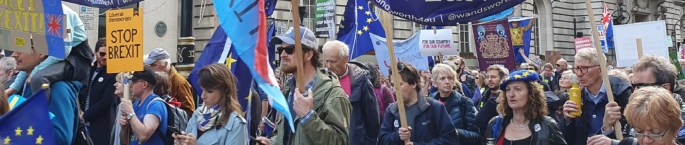
The “non” in that quote is really rather worrying. Many hundreds of thousands, possibly millions, have made their voice heard over the last few years, marching through London and other places in the UK for a second referendum on Brexit. Despite the large number of people out in the street there was no violence and although the subject was serious the ambiance was cheerful.
A healthy democracy depends on free speech and the rule of law. There is reason for great concern when the Government chooses to attack our right to non-violent protests. It begs the question “What are they afraid of?” Maybe they don’t like the song of angry men.
In the same “justice overhaul” the Home Secretary and the Lord Chancellor also suggest an increase of the maximum penalty for criminal damage of a memorial from 3 months to 10 years, whereas for assaulting an emergency worker the maximum will be a mere 2 year sentence.
The Good Law Project has instructed experienced lawyers to look into this matter and produce a report.







 STANCE NEWS