The Best Defence is a Good Offence

As if they anticipated the court’s decision, the Mail on Sunday published an attack on the Good Law Project’s founder, Jolyon Maugham QC, last weekend.

The article includes irrelevant references to Mr Maugham’s killing of a fox in his garden and implies that donations which finance the Good Law Project may not be used as intended. The Mail on Sunday also suggests that Mr Maugham has tried to play down his previous career, despite the bio on GLP’s website.

“[The attack] is a transparent and deceitful attempt by Government to target one of its most effective critics,” the Good Law Project comments in a statement.

Yesterday the High Court ruled that our Government acted unlawfully when awarding a contract to the PR firm “Public First”, which is run by friends of Dominic Cummings and Michael Gove. It is the second time in just a few months that the High Court judged that a Cabinet Minister acted unlawfully. Both cases were brought by the Good Law Project.

Three Good Apples

The interview board spoke to four applicants for Ofcom chairman and recommended three of the candidates to the Government. Their response is to appoint a new interview board, rather than appoint one of the approved candidates.

It had been expected that PM Boris Johnson’s preferred candidate, Paul Dacre, would be appointed in May. The interview board, however, found that he was “not appointable”.

Critics within the trade and from the general public have claimed that Ofcom is – and should remain – an independent body providing independent guidance. This independence might be jeopardised with Mr Dacre at the helm. He repeatedly made his stance against the BBC clear during his 26 years as editor of the Daily Mail.

The Government’s move to appoint a new interview board rather than accept the recommendations of the current panel can be seen as a further step towards its cultural cleansing.

Reckless Procurement Revealed in Explosive Court Case

On Tuesday, the same day that the National Audit Office finds that the Government lacked detailed contingency plans for a pandemic, the High Court started hearing a case against Matt Hancock.

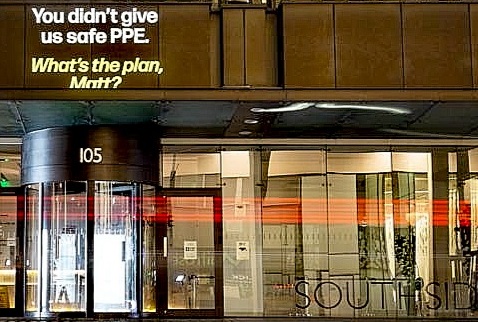
It is the Good Law Project and EveryDoctor that have challenged the Health Secretary over the Government’s unlawful procurement of PPE contracts. The previous weekend EveryDoctor projected the question “What’s the plan, Matt?” in giant illuminated script on buildings across London, the Department of Health among others.

There are many explosive revelations expected during this week’s hearing. Jolyon Maugham, director of the Good Law Project, lists a few facts which were revealed during the first two days:

  • Government paid tens of millions of pounds to PestFix and Ayanda Capital for face masks which did not meet NHS standards.
  • Government prioritised companies because of who they knew and not what they could deliver.
  • The banks were so concerned about Government’s lack of due diligence on companies who had been handed huge contracts that they halted payments.

“The British public will want to know why companies that had little or no history of manufacturing or procurement won massive contracts, and why many of these companies were seemingly fast-tracked in so-called VIP lanes to the top of the bidding pile,” says Dr Julia Patterson, CEO of EveryDoctor.

Conservative Coup Could Be Cultural Cleansing

During the last 18 months close allies to the Government have filled seats on boards of public bodies.

Peter Riddell, the commissioner for public appointments commented on this in a speech last week. He emphasised that the “breadth of the campaign and close engagement of 10 Downing Street” makes a difference from earlier such trends. This is described as cultural cleansing by one chair of a big institution.

After reports of right-wing speakers being banned from university campus events the Government wanted to appoint a champion for free speech. The need for this was disputed by students and universities alike. At the same time people who disagree with the Government are being replaced by yes-men. The list is long, below are some recent examples.

Museum
Dr Aminul Hoque, whose academic work encourages decolonising the curriculum, was not reappointed as a trustee of the Royal Museums Greenwich, which also led to the resignation the chairman Sir Charles Dunstone.

Universities
Lord Wharton, who managed the prime minister’s leadership campaign, has been appointed to head the Office for Students.

Channel 4
Contrary to the recommendations of the board of Channel 4 and Ofcom, who traditionally does the vetting, the Culture Secretary Oliver Dowden blocked the reappointment of Uzma Hasan and Fru Hazlitt to the board.

Ofcom
Former editor of the Daily Mail, Paul Dacre, who is known for his criticism towards the BBC and used his newspaper to ardently campaign for Brexit, has been suggested to chair the media regulator Ofcom.

Riddell, himself, was recently reappointed for six months only. It will be interesting to see if his replacement in September is yet another cosy chum of No 10.

UN-Acceptable Racism Report

The Johnson Government has not only been taken to court by the EU for breaking international law, the UN now accuses No 10 of normalising white supremacy.

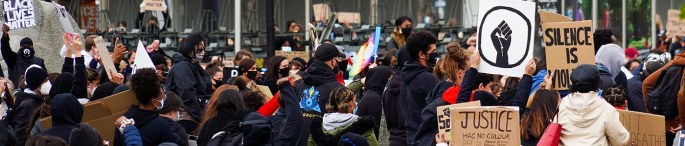
After the Black Lifes Matter protests last year Samuel Kasumu, special adviser for civil society and communities, initiated a report on racism in the UK. The report was published on 31 March 2021 and concluded that there was no institutional racism in Britain.

Earlier this week the human rights experts in the UN’s Working Group of Experts on People of African Decent condemned the report, stating that it is “tone-deaf” and “reprehensible”. It notes that the report has twisted data and misapplied statistics. Researchers have shown one example of this, from the labour market, in an article published on the LSE blog.

This echoes the criticism in Britain when the Government’s report was first published. A panel of experts said in an ITV interview that the report was “deeply offensive”.

Questions have also been raised over the impartiality of the commission and how it was finalised. Several scholars claim their research was misrepresented in the report. Commissioners did not get a chance to read the text in its entirety before publication and they were not aware of the conclusions presented by the chairman in his foreword. It is reported that the final result was dictated by No 10 to accommodate the Government’s own agenda, not to give a truthful picture of Britain today. Samuel Kasumu resigned the same day the report was published.

Photo: John Button / Shutterstock.com

From Russia with… love?

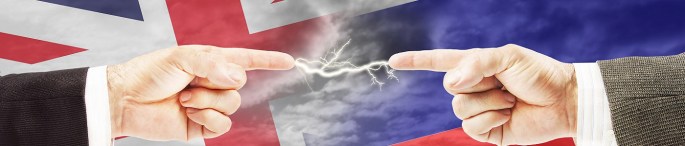
Russia still poses an active threat to the UK, according to the Government’s Integrated Review, published in March. Vladimir Putin stated in 2019 that a government’s duty is to create a stable life for its citizens. He went on to say that liberal democracies have failed in providing this stability for people.

This was the reason he declared “Cold War 2.0” to fight liberalism back in 2007 when most representatives of complacent western democracies did not see the need to take him seriously. Researchers of political science agree that Putin perceives a united Europe and a strong USA as a threat to Russia. This is why he was in favour of Brexit in the hope it would help destabilise the EU. He believes that by interfering in domestic politics on other continents Russia gains international power.

In the last decade it has been proved that Russian agents have operated and poisoned people on British soil. The so-called “Russia Report”, published after almost a year’s delay last July, showed that Russia had meddled in political campaigns at least since the Scottish independence referendum in 2014 and up until the General Election of 2019.

The Vote Leave campaign broke electoral law. The source of dubious contributions from rich donors with Russian connections are still being investigated.

The Government claims that British citizens of Russian origin should not be discriminated against. They have the same right as all other Brits to make donations, which is of course true. What is conspicuous is that there are a few, very wealthy individuals with close ties to the Russian president who repeatedly feed money into the Conservative party, while UK officials are accused of turning a blind eye to the threat of foreign interference in British politics.

Money not Sex

At the weekend it was confirmed – what many had long suspected – that there had been an affair between the Prime Minister and Jennifer Arcuri.

As sordid and sad as the story may be, with a deceived wife, let-down children and abandoned lovers along the way, their bedroom stories should be their own business and none of ours.

What is very much our business, however, is the tax payers’ money which was spent on the, then, Mayor of London’s sex partner. The police decided not to investigate the matter and that was surely yet another message to top ministers that they can get away with questionable behaviour.

A recent parallel is the Health Minister awarding contracts during the Covid crisis without proper procurement procedures. The High Court later stated that this was unlawful, but so far there has been no repercussion.

The Greater London Assembly has now decided to resume their investigation of Mr Johnson’s conduct in public life.

For Everybody to See

“The contracts are there on record for everybody to see,” said the Prime Minister. Except for the 100 he’d forgotten about.

19 February 2021
The High Court rules that the Health Secretary acted unlawfully by not publishing contracts worth hundreds of millions of pounds.

22 February 2021
The Prime Minister assured us that all was there to see.

5 March 2021
The High Court confirmed that out of 708 contracts there were still 100 unpublished.

Yet another example of how the Government misleads Parliament and the public.


The BBC keeps a timeline of the Government’s procurement of PPE during the pandemic.

Whitehall of Mirrors

Whitehall in 2021 is like a hall of mirrors, a maze of illusions and broken promises. Revelations, which a few years ago would have caused resignation, are simply shrugged off and brushed into oblivion.

Last November the Prime Minister announced he backed the Home Secretary Priti Patel after it had been confirmed she broke the ministerial code by bullying civil servants. This caused Standards Chief Sir Alex Allan, who had been asked to investigate the allegations, to resign.

Only a few weeks ago the High Court found Health Secretary Matt Hancock to have been acting unlawfully with contracts on PPE for medical staff. His response was that there wasn’t time for regular procurement because of the urgency of the situation when the pandemic broke out in 2020. Hancock also claimed there had never actually been a shortage of PPE.

BBC Panorama shows in their documentary Cashing in on Covid how the Government created a VIP lane for friends to win contracts.

Michael Gove has been found in contempt of Parliament, just like his ally and adviser Dominic Cummings in 2019, by simply not showing up to a committee hearing where difficult questions might be expected.

For centuries, politicians have – at least given the impression to – been proud to honourably serve the country. If they were found to lie or break the law, there was a public scandal and they had to resign. There has been a distinctive shift in standards for cabinet ministers in this Government which seems to normalise contradictions, hiding, lying and breaking the ministerial code.

Trashing the Mash

The BBC has decided to discontinue the satire show “The Mash Report” on grounds that it is too left-wing and woke.

What the BBC decision makers seem to have overlooked is that the nature of satire is to mock politicians and other people in power. Since the Conservative Party has been in power for more than a decade there has been many jokes on their expense.

Some sources claimed that BBC’s new director general Tim Davie, who is very loyal to the Conservatives, was behind the decision to axe the popular show. It seems unfortunate that the BBC, which for generations has been a beacon of light and role model of unbiased reporting and quality TV-productions, should choose to make such a decision on political grounds.

There is speculation that the program will continue on a competing channel, but unfortunately the BBC’s credibility as an unbiased broadcaster is already stained. A democracy needs to allow for a wide spectrum of opinions. Free speech and freedom of the press are two important building bricks to uphold this principle.