Russia still poses an active threat to the UK, according to the Government’s Integrated Review, published in March. Vladimir Putin stated in 2019 that a government’s duty is to create a stable life for its citizens. He went on to say that liberal democracies have failed in providing this stability for people.
This was the reason he declared “Cold War 2.0” to fight liberalism back in 2007 when most representatives of complacent western democracies did not see the need to take him seriously. Researchers of political science agree that Putin perceives a united Europe and a strong USA as a threat to Russia. This is why he was in favour of Brexit in the hope it would help destabilise the EU. He believes that by interfering in domestic politics on other continents Russia gains international power.
In the last decade it has been proved that Russian agents have operated and poisoned people on British soil. The so-called “Russia Report”, published after almost a year’s delay last July, showed that Russia had meddled in political campaigns at least since the Scottish independence referendum in 2014 and up until the General Election of 2019.
The Government claims that British citizens of Russian origin should not be discriminated against. They have the same right as all other Brits to make donations, which is of course true. What is conspicuous is that there are a few, very wealthy individuals with close ties to the Russian president who repeatedly feed money into the Conservative party, while UK officials are accused of turning a blind eye to the threat of foreign interference in British politics.
Reflections from the European Parliament by Terry Reintke, MEP
It has been more than a year now since we had to say goodbye to our UK colleagues in the European Parliament. We sang “Auld Lang Syne” together and tried to look ahead as the damaging decision for the UK to leave the EU was finalised.
By now, the transition period is over. We are still in the middle of a global pandemic and a deal for the future relations has been presented – after difficult negotiations that were too limited in time to actually tackle all areas. The outcome is being scrutinised by the European Parliament. Many committees have given their green light, although numerous criticism has been voiced.
First and foremost, the European Parliament will fight for a stronger democratic engagement in the governance of the treaty, both of the Parliament itself as the only directly elected institution and thus representation of EU citizens as well as of civil cavity organisations to have a strong voice in the bumpy road ahead.
Brexit is far from being over
The question that arises in the next months and years will become more and more complex and potentially difficult to solve – as the UK will potentially more and more diverge from EU standards. What was established as a solution to this – non-regression and the newly established rebalancing mechanism – will have to be tested in practice. In a lot of ways, this deal is more far reaching than any other deal the EU has ever negotiated and will become a reference point in future trade negotiations. However, this also means, that these new mechanisms and ideas have never been used before. With the transition period, a lot of uncertainty ended only to be replaced by new one.
The fact that the adhesion of both sides to the European Convention of Human Rights was celebrated as a great success, speaks volumes about where we stand in the struggle for rule of law and fundamental rights. There is an authoritarian wave blowing over Europe. Governments – in the EU, but also the one in the UK – trying to restrict fundamental freedoms and basic structures of checks and balances. As European citizens, we have to work together to stand up to this threat. A strong multilateral rules-based system and a European Union that stands up for democracy are good foundations for this. Nevertheless, it will take all of us – in the Parliaments and in the streets – to defend our democracies, the rule of law and fundamental rights.
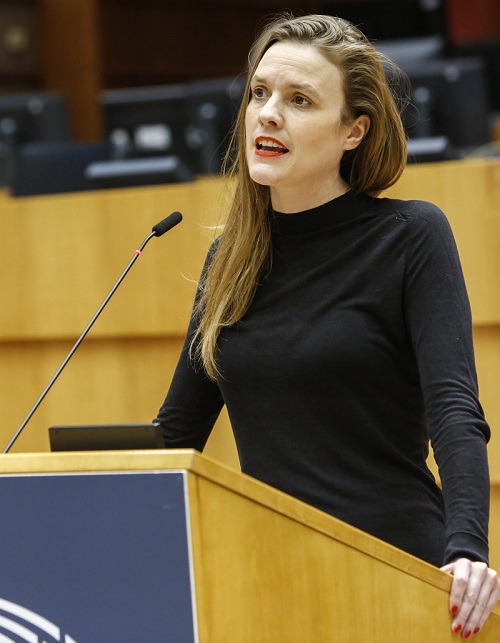
Terry Reintke in the European Parliament. Photo: The European Parliament
Overall, this deal is obviously much worse than the deal the UK had before. It means bureaucracy, a multitude of additional committees, the loss of rights, freedom and many opportunities coming from EU membership. Most prominently felt perhaps by the thousands of students and young adults who no longer can participate in the Erasmus exchange programme.
Looking into the future, the European Parliament is going to stay open and ready for UK citizens. We have seen the rise of the biggest pro-European citizen’s movement in the UK over the past years. We will do everything we can to keep the ties with our counterparts on the other side of the channel. We are planning networking events, exchanges with citizens, civil society organisations and obviously building strong ties in political fields where our cooperation will remain crucial such as climate policies, foreign and security policy and so many more.
Our door will stay open. We will continue to support all the people in the UK who will struggle in the coming days and years, but who also will fight with all their heart for a strong Europe with the United Kingdom as a part of it.
Terry Reintke is vice-president of the Greens/EFA group in the European Parliament, co-president of the LGBTI Intergroup and founder of the EU-UK Friendship Group. Terry studied political science in Berlin and Edinburgh. She was spokesperson of the Federation of Young European Greens (FYEG) before entering the European Parliament in 2014.
Time and time again during the election campaign of 2019 the Conservative Party assured us that the NHS is not for sale. In March 2020, when the UK started trade negotiations with the US, Prime Minister Johnson declared that the NHS was not on the table.
Yet less than a year later American owned Operose Health has taken over a large number of GP surgeries in greater London causing concerns in for instance Maida Vale, Croydon and Brent and is now the UK’s largest provider of primary care.
It is also notable that the Government recently appointed Samantha Jones as an expert advisor for NHS transformation. Ms Jones was previously a chief executive of Operose Health.
The 1990’s offered hopeful days when the peace process started in Northern Ireland. It took years to finalise what has become known as the Good Friday Agreement in 1998.
The EU has created the longest period of peace between the member states since Roman times because it offers countries an opportunity to discuss and work together rather than fighting against each other. It was on this platform that the bitter feuds in Ireland could be settled. It has given us more than 20 years of peace within the United Kingdom.
The politicians and spin doctors who painted a utopian picture of an undefined Brexit dismissed concerns that the peace in Northern Ireland might be jeopardised. Yet now, only three months after Brexit, there is already new unrest.
It is unrealistic to expect that one politician should know everything about everything, that’s why they have experts to advise them. The tragedy with Brexit is that the leading figures of the campaign claimed to have had enough of experts. Day by day, week by week we see the sad results of that approach.
In 1992 Maurice Harron’s bronze statues in Londonderry joined hands in hope. Today’s politicians need to call in the experts to make sure those hands don’t slip away from each other.
There are reports today that the EU is taking the UK to court. Why are they being so nasty?
Well, maybe they’re not? Some people would argue that it is the only step they can take when the British government has broken international law and the duty of good faith.
The Brexit deal was rushed through Parliament and – it seems – many MPs voted for it because it was the only deal on offer at that desperate point of negotiations and a no-deal scenario would be even worse.
After a few weeks we see an increasing pile of evidence that Parliament, and even the ministers who negotiated the deal, didn’t really understand the implications.
One possible explanation might be that Prime Minister Johnson was so set on “getting Brexit done” that he forgot to read the fine print. And instead of admitting he got it wrong he has now brought us to a situation where the whole country is in court, accused of breaking international law.
It may not be the EU who are being nasty. It may be that this court case is the inevitable effect of a bad deal.
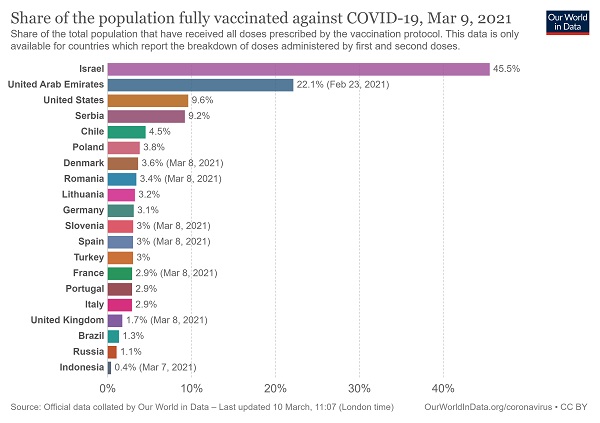
The British Government has been lauded for its successful vaccination programme to stem the spread of Covid-19. Government ministers and the tabloid press like to give the impression that Britain is “world beating”, as if it was a competition between countries. But if it were a competition – where is Britain on the chart above?
Zooming in on the Government’s approach, it does seem they took some chances, which could prove to be devastating for the people involved. They actually submitted citizens to a vast unmonitored clinical trial.
Approval of vaccine was rushed through without all formalities in place.
Contrary to the manufacturers’ advice and results in their clinical trials the period between the first jab and the second was stretched out from three weeks to three months.
Claims were made that the vaccination success was a result of Brexit, which is totally untrue.
Up until now, we seem to have been very lucky and no unexpected side effects have been reported, as now appears to be the case in Denmark. There are now even some theories that the immunisation may be more effective if the second dose is administered later than three weeks after the first.
For everyone who received one dose only and is still waiting for the second dose, this is good news. However, the fact remains – the British Government took a huge risk when it acted against scientific advice.
Furthermore, we’re still way behind many countries in having the population fully vaccinated. The latest statistics, thanks to Our World in Data, show Britain in 17th place.
In a press release issued on 9 March 2021 the Government states that they want to – among other things – “Strengthen police powers to tackle non-violent protests…”.
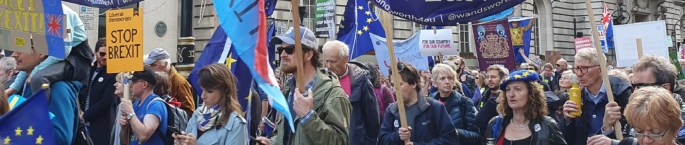
The “non” in that quote is really rather worrying. Many hundreds of thousands, possibly millions, have made their voice heard over the last few years, marching through London and other places in the UK for a second referendum on Brexit. Despite the large number of people out in the street there was no violence and although the subject was serious the ambiance was cheerful.
A healthy democracy depends on free speech and the rule of law. There is reason for great concern when the Government chooses to attack our right to non-violent protests. It begs the question “What are they afraid of?” Maybe they don’t like the song of angry men.
In the same “justice overhaul” the Home Secretary and the Lord Chancellor also suggest an increase of the maximum penalty for criminal damage of a memorial from 3 months to 10 years, whereas for assaulting an emergency worker the maximum will be a mere 2 year sentence.
The Good Law Project has instructed experienced lawyers to look into this matter and produce a report.
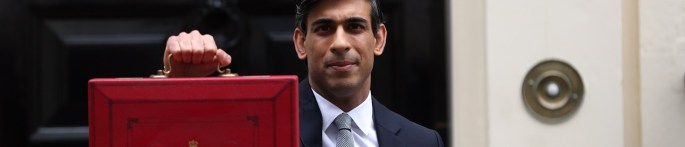
When the Chancellor Rishi Sunak presented the budget on 3 March 2021 he proudly announced that Britain will get eight new freeports. He said:
“A policy we can only pursue now we’re outside the European Union: Freeports. Freeports are special economic zones with different rules to make it easier and cheaper to do business.” Read the whole speech at the Government’s website.
It’s an idea that was floated by Boris Johnson in 2019 during his candidacy for leadership together with a misleading statement that we had to wait until after Brexit.
Facts show, however, that presently there are some 80 freeports in the EU and Britain actually had five freeports up until 2012, when the then conservative government chose to not renew the legislation for them.






 STANCE NEWS