Trashing the Mash

The BBC has decided to discontinue the satire show “The Mash Report” on grounds that it is too left-wing and woke.

What the BBC decision makers seem to have overlooked is that the nature of satire is to mock politicians and other people in power. Since the Conservative Party has been in power for more than a decade there has been many jokes on their expense.

Some sources claimed that BBC’s new director general Tim Davie, who is very loyal to the Conservatives, was behind the decision to axe the popular show. It seems unfortunate that the BBC, which for generations has been a beacon of light and role model of unbiased reporting and quality TV-productions, should choose to make such a decision on political grounds.

There is speculation that the program will continue on a competing channel, but unfortunately the BBC’s credibility as an unbiased broadcaster is already stained. A democracy needs to allow for a wide spectrum of opinions. Free speech and freedom of the press are two important building bricks to uphold this principle.

Cause and Effect

There are reports today that the EU is taking the UK to court. Why are they being so nasty?

Well, maybe they’re not? Some people would argue that it is the only step they can take when the British government has broken international law and the duty of good faith.

The Brexit deal was rushed through Parliament and – it seems – many MPs voted for it because it was the only deal on offer at that desperate point of negotiations and a no-deal scenario would be even worse.

After a few weeks we see an increasing pile of evidence that Parliament, and even the ministers who negotiated the deal, didn’t really understand the implications.

One possible explanation might be that Prime Minister Johnson was so set on “getting Brexit done” that he forgot to read the fine print. And instead of admitting he got it wrong he has now brought us to a situation where the whole country is in court, accused of breaking international law.

It may not be the EU who are being nasty. It may be that this court case is the inevitable effect of a bad deal.

Questionable Answers

At Prime Minister’s Questions yesterday Sir Keir Starmer asked Boris Johnson: “If he so determined to cut NHS pay, will he at least show some courage and put it to a vote in this Parliament?”

Mr Johnson replied: “The last time that we put this to a vote, the right hon. and learned Gentleman voted against it.”

A statement which is simply not true.

Source: Hansard, 10 March 2021

Vaccine Chancer

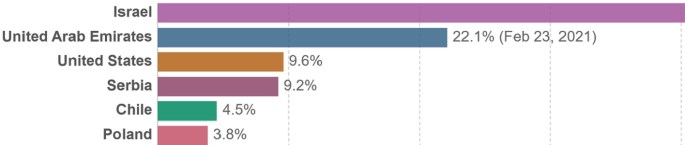
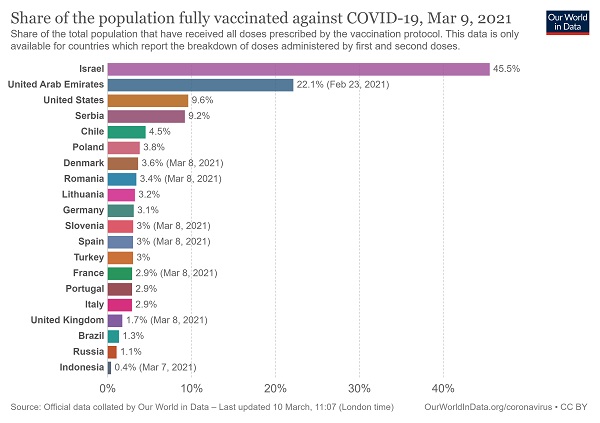
The British Government has been lauded for its successful vaccination programme to stem the spread of Covid-19. Government ministers and the tabloid press like to give the impression that Britain is “world beating”, as if it was a competition between countries. But if it were a competition – where is Britain on the chart above?

Zooming in on the Government’s approach, it does seem they took some chances, which could prove to be devastating for the people involved. They actually submitted citizens to a vast unmonitored clinical trial.

  1. Approval of vaccine was rushed through without all formalities in place.
  2. Contrary to the manufacturers’ advice and results in their clinical trials the period between the first jab and the second was stretched out from three weeks to three months.
  3. Claims were made that the vaccination success was a result of Brexit, which is totally untrue.

Up until now, we seem to have been very lucky and no unexpected side effects have been reported, as now appears to be the case in Denmark. There are now even some theories that the immunisation may be more effective if the second dose is administered later than three weeks after the first.

For everyone who received one dose only and is still waiting for the second dose, this is good news. However, the fact remains – the British Government took a huge risk when it acted against scientific advice.

Furthermore, we’re still way behind many countries in having the population fully vaccinated. The latest statistics, thanks to Our World in Data, show Britain in 17th place.

Do You Hear The People Sing?

In a press release issued on 9 March 2021 the Government states that they want to – among other things – “Strengthen police powers to tackle non-violent protests…”.

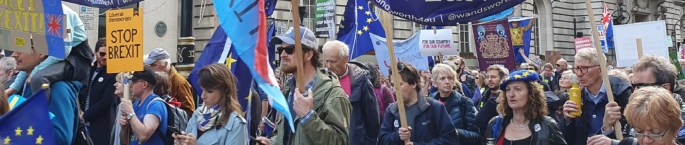
The “non” in that quote is really rather worrying. Many hundreds of thousands, possibly millions, have made their voice heard over the last few years, marching through London and other places in the UK for a second referendum on Brexit. Despite the large number of people out in the street there was no violence and although the subject was serious the ambiance was cheerful.

A healthy democracy depends on free speech and the rule of law. There is reason for great concern when the Government chooses to attack our right to non-violent protests. It begs the question “What are they afraid of?” Maybe they don’t like the song of angry men.

In the same “justice overhaul” the Home Secretary and the Lord Chancellor also suggest an increase of the maximum penalty for criminal damage of a memorial from 3 months to 10 years, whereas for assaulting an emergency worker the maximum will be a mere 2 year sentence.

The Good Law Project has instructed experienced lawyers to look into this matter and produce a report.

Freeport Fibs

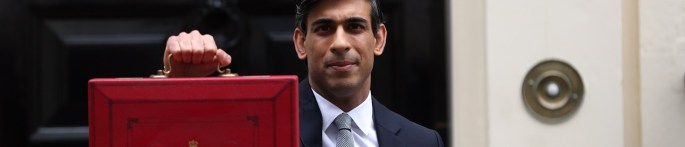
When the Chancellor Rishi Sunak presented the budget on 3 March 2021 he proudly announced that Britain will get eight new freeports. He said:

“A policy we can only pursue now we’re outside the European Union:
Freeports.
Freeports are special economic zones with different rules to make it easier and cheaper to do business.”

Read the whole speech at the Government’s website.

It’s an idea that was floated by Boris Johnson in 2019 during his candidacy for leadership together with a misleading statement that we had to wait until after Brexit.

Facts show, however, that presently there are some 80 freeports in the EU and Britain actually had five freeports up until 2012, when the then conservative government chose to not renew the legislation for them.

Photo: © Ilyas Tayfun Salci/Shutterstock

List of Lies

For hundreds, even thousands, of years it has been a common perception that politicians sometimes have to be economical with the truth. It is not unusual that politicians are accused of not keeping their promises after they’ve been elected.

However, since the summer of 2019 representatives of the British Government has been seen to regularly bend the truth, often in a way which in a different era would have called for resignations. Below are some examples:

28 August 2019 – A small privy council gives the Queen misleading advice as to why she must prorogue Parliament for five weeks. On 24 September the Supreme Court ruled the decision unlawful, watch the video.

22 November 2019 – At Question Time, Boris Johnson says he does not want to interfere in with the normal timetable of publishing a report about Russian interference in British democracy. It turns out he was actually the one interfering by delaying publishing of said report.

29 November 2019 – Boris Johnson claims that a £34 billion increase to the NHS is the biggest in living memory, while a fact check easily shows this is not the case.

6 December 2019 – All through the election campaign in November and December 2019 Boris Johnson repeatedly promised that there would be no tariffs and no border checks between Great Britain and Northern Ireland after Brexit. Watch one such occasion from a press conference in Kent. Since Brexit happened on 1 January 2021, we know this is not the case.

8 December 2019 – Boris Johnson predicts a “Brexit baby boom” in an interview in Sunday Times. He goes on to boast that he also “prophesised” a baby boom after the London Olympics in 2012 and claims it happened. The fact is there was a baby boom in 2012, but a fall of 4% in nativity the following year.

17 June 2020 – Boris Johnson denies claims that 600,000 children are living in poverty and states that 400,000 fewer families live in poverty than ten years earlier. The Office for Statistics Regulations later proves this number to be incorrect. Read the Children’s Commissioner’s fact check.

2 December 2020 – Health Secretary Matt Hancock and Leader of the House Jacob Rees-Mogg claim that Brexit made it possible to start the vaccination programme against Covid-19 ahead of other countries in the EU. At the time, the UK was still bound by EU legislation which means that it could have been done with or without Brexit, as stated by the BBC.


Above is listed but a few of the present Government’s alternative facts. There are many much more comprehensive lists online. Do read for instance Boris Johnson’s Lies and The New European for more details.

Use it or Lose it

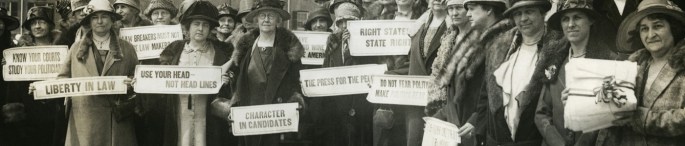
We’ve only had universal suffrage for a bit more than a century. A hundred years might sound like a long time, but from a historical perspective it’s a drop in the ocean.

It’s often emphasised that the 1918 electoral reform gave women the right to vote, but what we tend to forget was that it also included men. A vast number of men were sent out to World War I to fight for their country, a country that didn’t grant them the right to vote for government.

This changed after the war thanks to brave women and men who had campaigned for suffrage for more than a decade. Some even went to prison.

The right to vote is one of the most important building bricks in a democracy. Voting is our chance to influence how the country is run. Remember that if you refrain from voting, you actually increase the chances of “the other side” to win.

A Tender Touch

Every year the Government spends billions of pounds on goods and services. If there isn’t enough revenue from taxes, they have to borrow.

If they borrow, the loan will of course eventually have to be paid back, and that will also have to – in the end – be tax money. It’s important to remember that all Government expenditure is money that has been paid in by ordinary people like you and me.

To make sure our tax money is used in the best possible way Parliament requires all government departments and their related organisations to ensure that they meet the minimum mandatory Government Buying Standards (GBS) and there is guidance to best practice on gov.uk.

All government departments should invite suppliers to tender every time they plan a big purchase. This gives them a chance to compare prices and quality from different bidders and make sure they spend our tax money sensibly.